
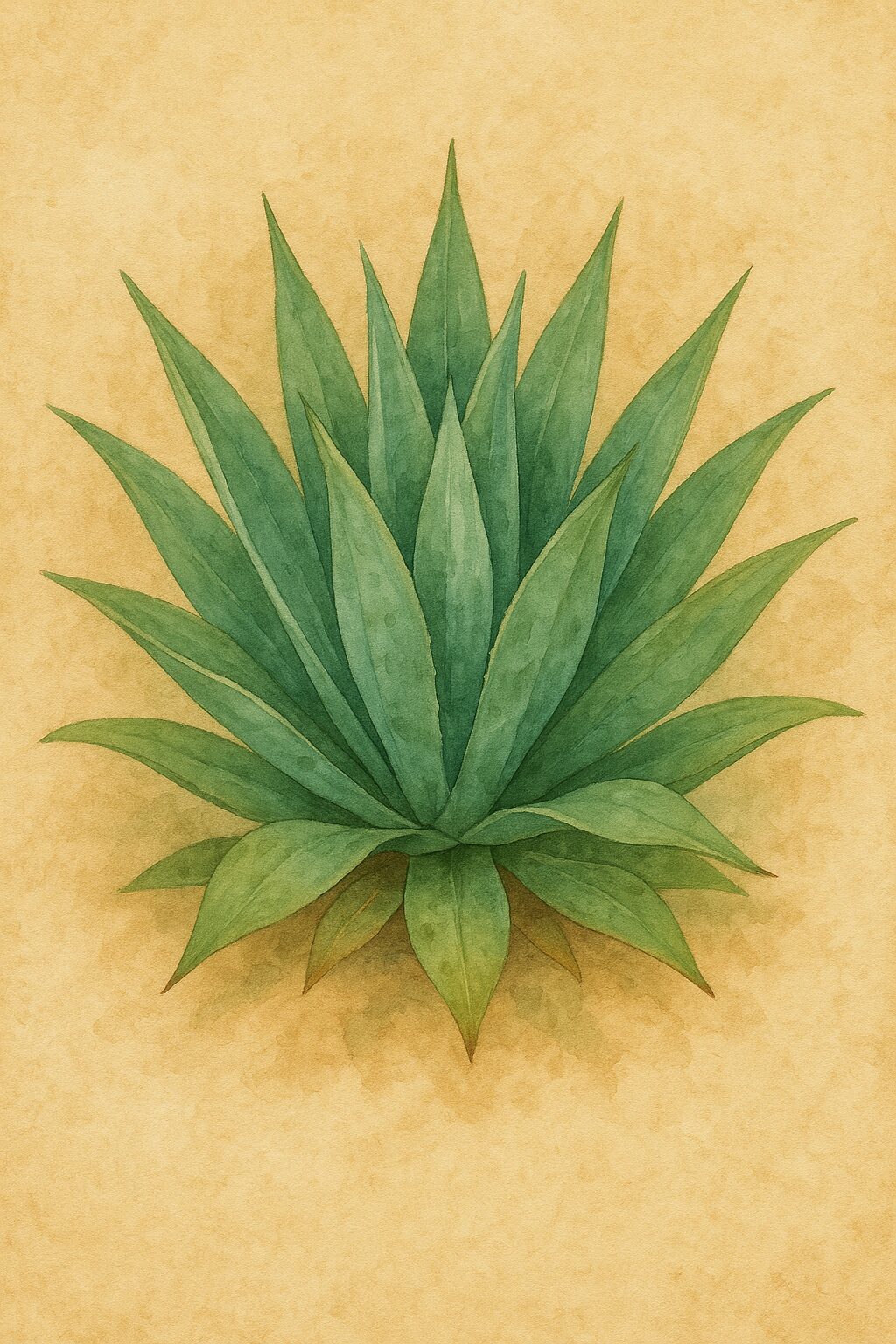
Common Name: Agave
The word agave comes from the Greek “αγαυή”, meaning “noble” or “illustrious.”
Alternate names include Century Plant, Maguey, and American Aloe.
Scientific Name: Agave americana (most common cultivated species); Agave tequilana (species used to make tequila), Agave angustifolia, etc.
Some botanists argue that Agave tequilana should not be classified as a separate species, as it has many botanical similarities to the species group, Agave angustifolia; however, due to its history and mention in Mexican liquor laws concerning tequila, it remains its own species.
Editorial Note: This entry is part of The Culinary Compendium’s ongoing ingredient archive and will be expanded as new sources are examined.
History: Agave is a resilient, spiny succulent known for its sweet sap (aguamiel) and its role in fermented and distilled spirits like pulque, mezcal, and tequila (made only from Agave tequilana). It includes about 136 species (sources vary), although not all of them are edible.
Agave has been cultivated for 8,000 years and is one of the oldest known plants domesticated by the indigenous people of America, particularly those inhabiting central America and the region now known as the southern U.S.A.
The arrival of the Spanish recognized agave as a source of food and fiber, but it was seen as primitive and barbaric. However, its importance could not be denied. Spanish chronicler, Friar Bernadino de Sahagún, in his study, Florentine Codex, recorded the use of agave in everyday indigenous life, particularly the Nahua. It wasn’t long before the Spanish began to utilize agave as well, although mainly for making the distilled spirit, mezcal.
Interesting Facts: In Aztec myth, the agave was sacred to Mayahuel, the goddess of fertility, nourishment, and intoxication. According to the myth, when she died, her body became the first agave plant. Her 400 rabbit children, the Centzon Tōtōchtin, personified drunkenness and merrymaking.
Despite the name, the “Century Plant” only lives 10-30 years, not a century.
Uses: The plant had many uses as food (core), drink (sap), fiber (leaves), and tools (needles).
Selection & Storage: Typically harvested after 7-15 years, mature plants will show bulging hearts (piñas), which resemble pineapples, and begin forming flower stalks. Agave is typically harvested before blooming, as the plant dies soon after.
Taste Rating: ☆☆☆☆☆
Agave is not yet rated.
The Culinary Compendium is a working archive. If you have encountered this ingredient in your own research, regional cooking, historical sources, or family tradition. I invite you to leave a note below. Each entry grows richer with time.
Leave a Reply
You must be logged in to post a comment.