
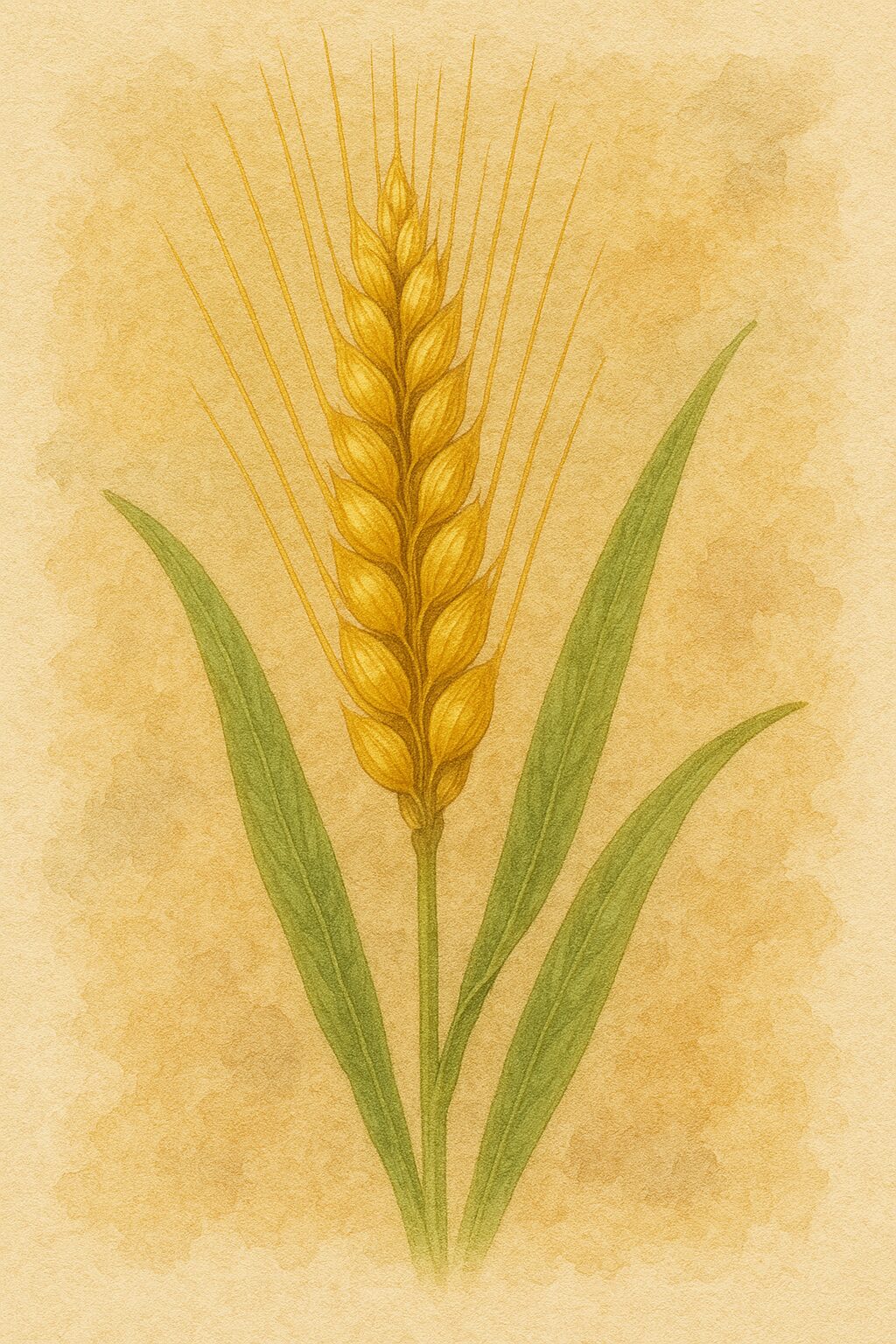
Common Name: Barley
Scientific Name: Hordeum vulgare
History: Barley evolved from the wild species Hordeum spontaneum, which still grows in the Fertile Crescent region. It was domesticated around 10,000 years ago, when ancient farmers noted its rapid growth and resilience to poor soil and dry conditions. Alongside einkorn and emmer wheat, this grain helped usher in the Neolithic Agricultural Revolution, laying the foundation for settled civilization.
Made its way to Egypt around 5000 BC, where it was used to make bread and beer. Barley was so important that it was even used in offerings to the gods, and tombs stored barley for use in the afterlife.
The Greeks and Romans used barley, which was preferred over wheat, to feed soldiers and livestock. Roman gladiators were sometimes called hordearii, meaning “barley men”, due to their barley-based diets.
Medieval Europe depended on barley to make dark breads and beer, especially during times when wheat was either scarce or reserved for the wealthy. wheat eventualy took over due to higher gluten content, which resulted in larger loaves.
Interesting Facts: Roman goddess of cereal grains, Ceres, wears a crown of braided barley.
Uses: Barley can be used in much the same way as other grains. It is most commonly added to soups and salads.
Selection & Storage: Barley comes in different forms, which are suited for different purposes.
Hulled Barley is the least processed, retains its bran, and is the most nutritious. It is best used in soups, salads, and pilafs.
Pearled Barley is polished to remove the bran, which results in faster cooking times but lower fiber content. It is best used in risottos and porridge.
Pot (Scotch) Barley is partially pearled and serves as a compromise between nutrition and convenience.
Taste Rating: ★★★☆☆
Let me know how you rate in the comment section below!
Leave a Reply
You must be logged in to post a comment.