
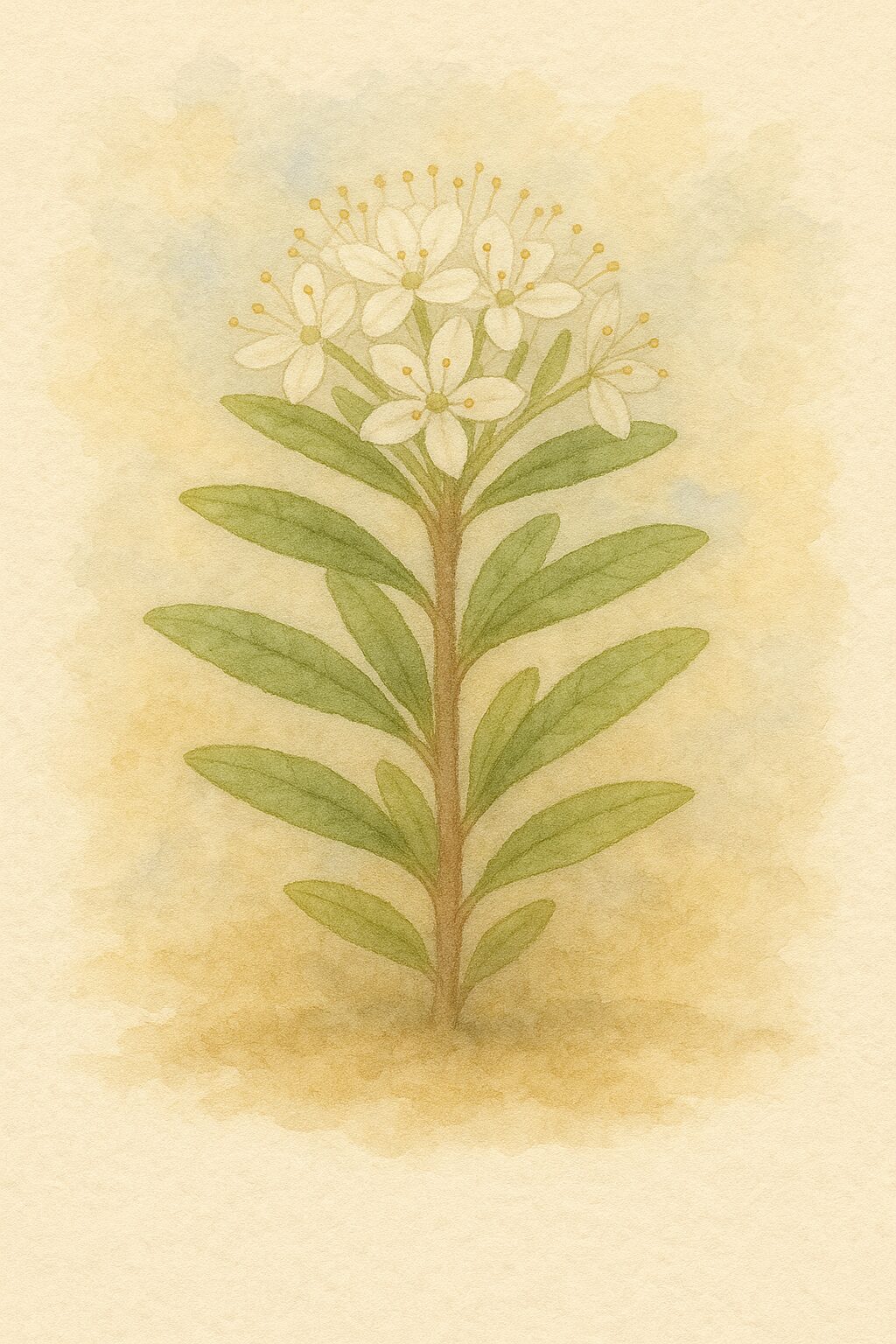
Common Name: Labrador Tea
Alternative names are Hudson Bay Tea, Indian Tea, Marsh Tea, Wild Rosemary, Greenland Tea, Muskeg Tea, and Bog Labrador Tea.
Scientific Name: Rhododendron groenlandicum, R. tomentosum, and R. neoglandulosum (regional variants)
Editorial Note: This entry is part of The Culinary Compendium’s ongoing ingredient archive and will be expanded as new sources are examined.
History: Labrador tea is an evergreen shrub native to northern North America. When steeped, it becomes a warming herbal infusion that has been used by Indigenous Americans for centuries. Though called a “tea”, it contains no caffeine and was traditionally brewed as a remedy for coughs and congestion.
In colonial America and New France, it came into common use as a tea substitute. This was done in response to the high taxation by the British on imported tea during the American Revolution.
Interesting Facts: Rhododendron groenlandicum, the most common species in Canada, is the official floral emblem of Labrador.
Uses: Labrador tea is sometimes used in craft brewing by foragers and herbalists.
Selection & Storage: Because it is an evergreen, the leaves can be harvested year-round. However, they are best in spring or early summer, just before flowering.
Young, healthy leaves have a strong aroma and should be dried before long-term storage.
Labrador is legally protected in some regions due to overharvesting concerns.
Caution: High doses or improperly prepared leaves can be mildly toxic due to ledol, a volatile oil found in older leaves.
Taste Rating: ☆☆☆☆☆
Labrador tea is not yet rated.
The Culinary Compendium is a working archive. If you have encountered this ingredient in your own research, regional cooking, historical sources, or family tradition. I invite you to leave a note below. Each entry grows richer with time.
Leave a Reply
You must be logged in to post a comment.