
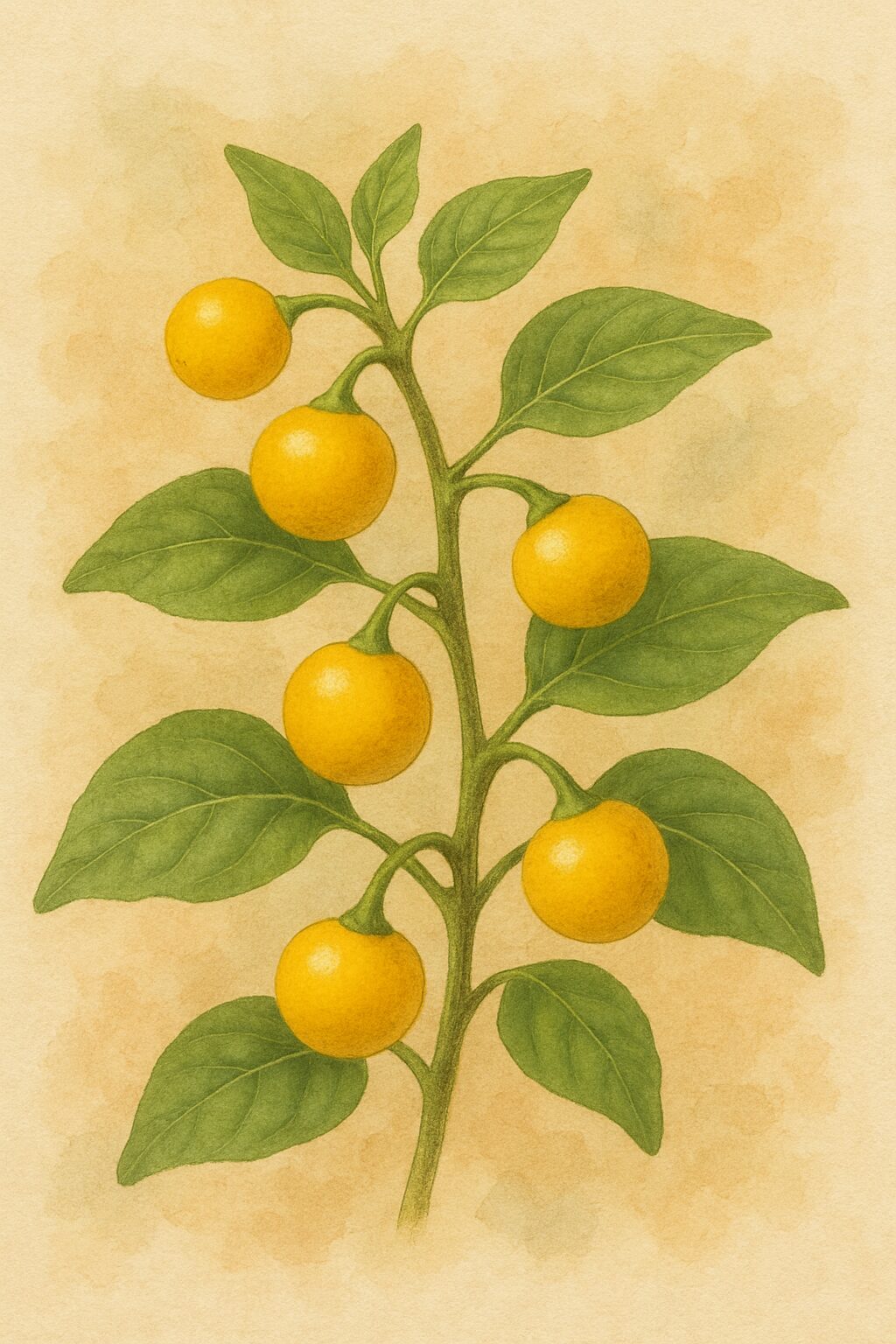
Common Name: Ají Charapita
Alternate names include Wild Peruvian Chili, Tettinas de Monk, Charapilla, and Ají Charapa
Scientific Name: Capsicum chinense
Editorial Note: This entry is part of The Culinary Compendium’s ongoing ingredient archive and will be expanded as new sources are examined.
History: Ají Charapita is native to the Amazon rainforest regions of northern Peru, particularly around the Loreto and San Martín areas.
It has been known and foraged by indigenous Amazonian communities for centuries. It was not typically cultivated until recently, with only a few niche farms producing it.
Interesting Facts: The spice level is about 30,000-50,000 units on the Scoville Scale, making it comparable to cayenne or a mild habanero.
Uses: Gourmet chefs and spice collectors rediscovered ají charapita during the early 2000s, often using it as a garnish to add heat and flair to fine dishes.
Selection & Storage: Ají Charapita is typically consumed fresh, although export is rare and fresh chilies are difficult to find outside of Peru. However, seeds are available from select specialty growers.
Fresh chilies will keep about 1-2 weeks in the fridge if they are whole and unwashed.
Dried chilies are also available, but they are sold at high prices. Ají Charapita has been cited as the “most expensive chili pepper in the world”.
Taste Rating: ☆☆☆☆☆
Ají Charapita is not yet rated.
The Culinary Compendium is a working archive. If you have encountered this ingredient in your own research, regional cooking, historical sources, or family tradition. I invite you to leave a note below. Each entry grows richer with time.
Leave a Reply
You must be logged in to post a comment.