
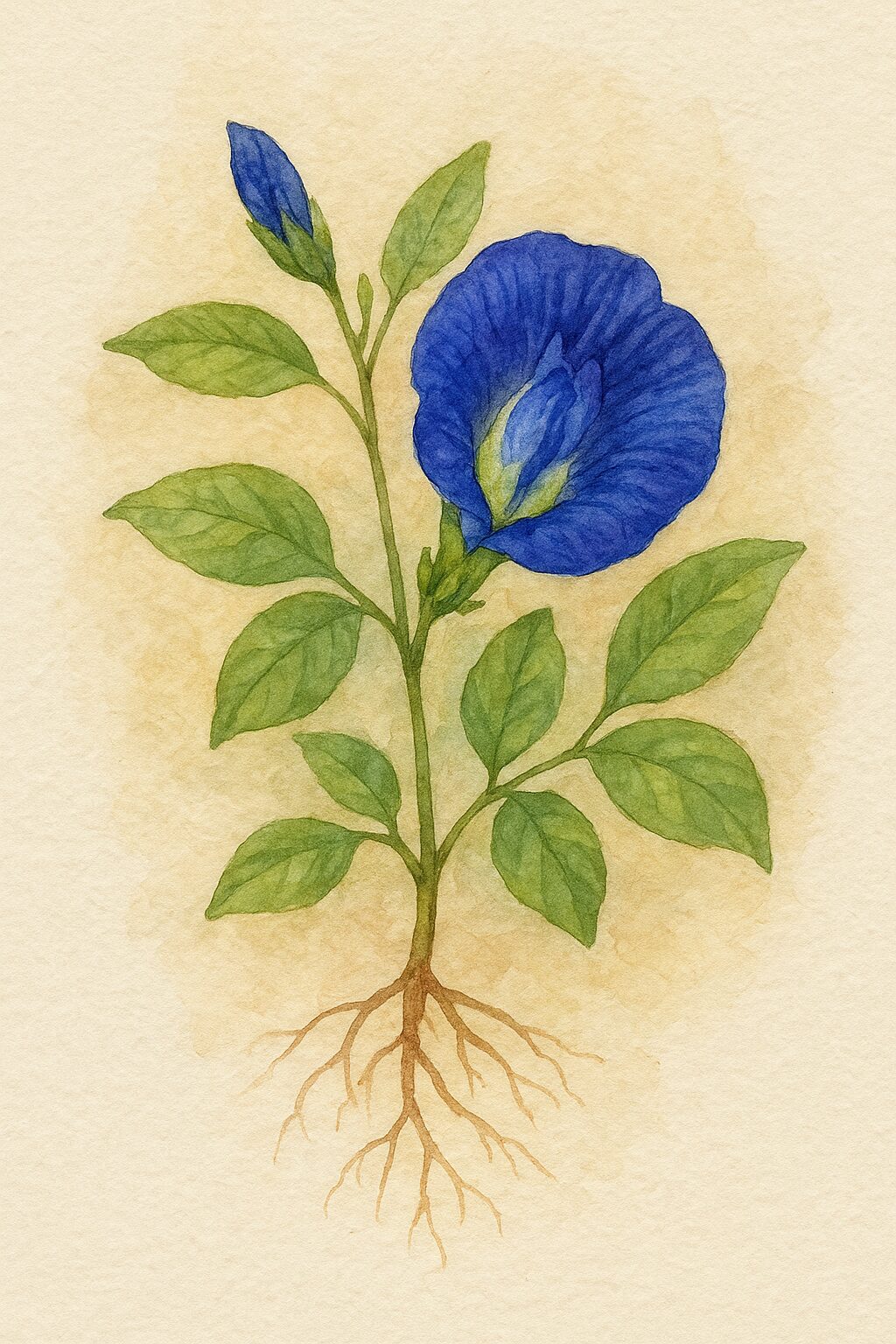
Common Name: Butterfly Pea Flower
Alternate names are Asian Pigeonwings, Blue Pea, or Darwin Pea.
Scientific Name: Clitoria ternatea
Botanists tried to change the somewhat controversial genus name to Vexillaria during the 18oos, but were unsuccessful.
Editorial Note: This entry is part of The Culinary Compendium’s ongoing ingredient archive and will be expanded as new sources are examined.
History: The butterfly pea is native to the Indonesian island of Ternate. However, it quickly spread throughout the rest of South Asia. The flower’s unusual blue hue was used as a natural dye for food and textiles. It was also used in Ayurvedic medicine to improve stress and memory.
European explorers first encountered the plant during the 17th century. It was well documented by German botanist Georg Eberhard Rumphius, who worked in the Dutch East Indies at the time. From then on, the butterfly pea flower was catalogued in European botanical gardens and distributed to Africa, the Caribbean, and Latin America, where the flower flourished in tropical climates.
During the 20th century, scientists discovered that certain plant compounds, such as terpenoids, anthocyanins, and cyclotides, exhibited antioxidant, antimicrobial, and anti-inflammatory properties. It became a global sensation during the rise of wellness culture and the advent of Instagram, thanks to its natural blue color and pH-driven color transformation.
Interesting Facts: Butterfly pea has a rare, naturally occurring, vivid blue color.
Butterfly pea tea will change from blue to light purple in the presence of an acid, like lemon juice. Extreme alkalinity can cause it to appear green.
Uses: Butterfly pea has been used as a natural blue food coloring for centuries, especially for rice, drinks, and desserts. The tea is a popular caffeine-free herbal infusion due to its fascinating color-changing properties. The flowers can be fried as fritters.
Selection & Storage: The best dried petals retain a rich, velvety blue color. The petals should be whole and unbroken; too many crumbled bits indicated poor handling. They should feel crisp and dry; any softness indicates moisture, which can lead to mold.
Store away from excess light, heat, and humidity in an airtight container. Appropriately stored, the flowers can last about a year before losing color and potency.
Taste Rating: ★★★☆☆
The Culinary Compendium is a working archive. If you have encountered this ingredient in your own research, regional cooking, historical sources, or family tradition. I invite you to leave a note below. Each entry grows richer with time.
Leave a Reply
You must be logged in to post a comment.