
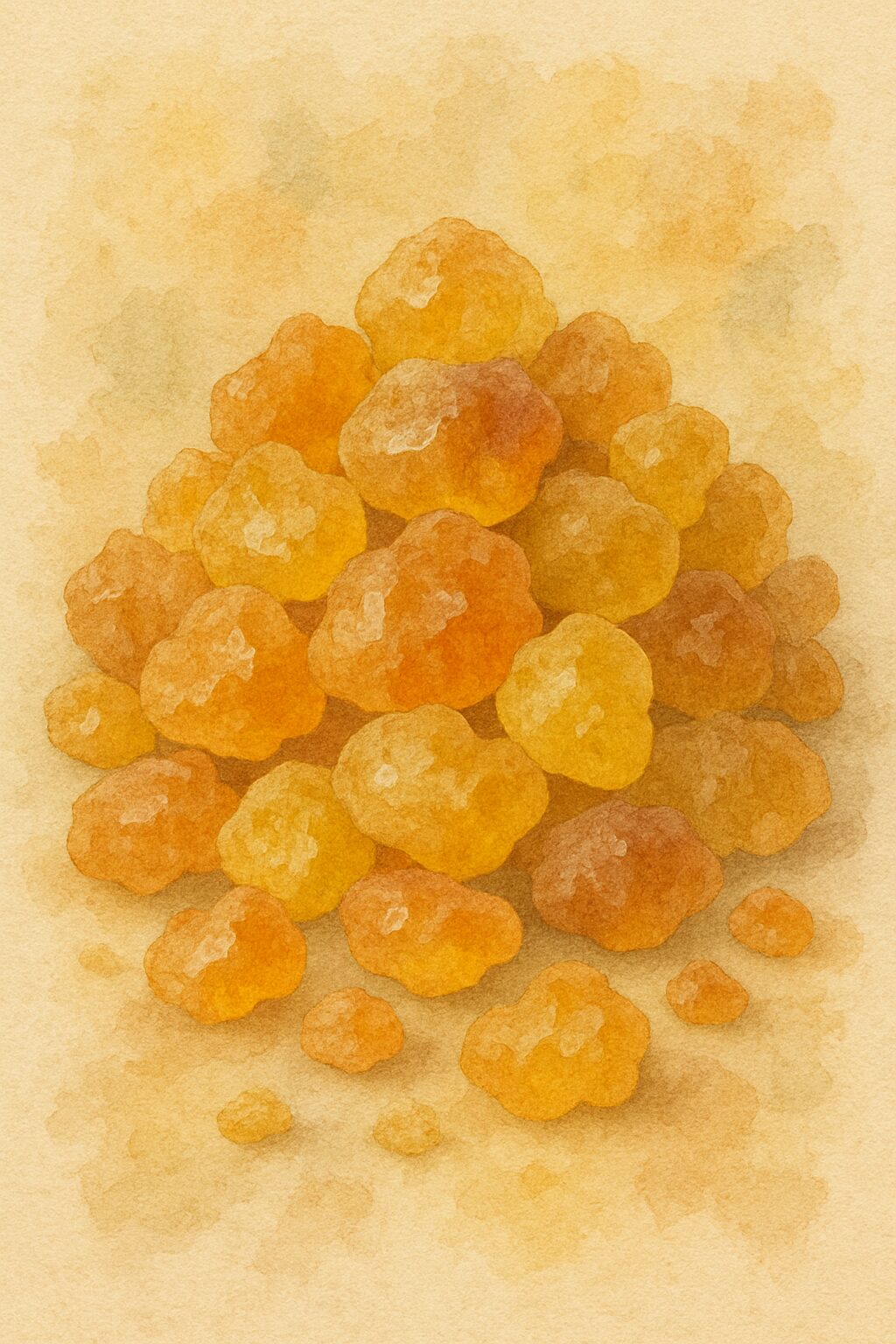
Common Name: Gum Arabic
Alternate names are Acacia Gum and E414.
Scientific Name: Acacia senegal
Editorial Note: This entry is part of The Culinary Compendium’s ongoing ingredient archive and will be expanded as new sources are examined.
History: Gum Arabic is a natural resin harvested from the sap of the Acacia tree. The acacia trees that produce it thrive in arid to semi-arid climates, especially along the Sahel belt of Africa.
In ancient Egypt, gum arabic was used as a binder for ink and cosmetics.
Europeans first encountered gum arabic from Arabic merchants and trade routes, which is most likely how it got its name, despite not originating in Arabia.
Interesting Facts: Gum Arabic can last decades without spoiling. When dried and rehydrated, it will bounce back as if it never aged at all.
Uses: Gum arabic is used as an emulsifier and stabilizer for soft drinks, gummies, and confectionery. It’s what gives candy that glossy, shiny finish.
Selection & Storage: When purchasing gum arabic for culinary use, be sure that the label reads “food-grade” or E414. Avoid cosmetic or art-grade gum arabic, as it may contain additives that are unsuitable for consumption.
Whole gum arabic should be hard and glassy, not chalky. When in powdered form it should feel silky and fine, not gritty, and have a neutral scent.
Taste Rating: ★☆☆☆☆
The flavor is mild and faintly sweet, if it tastes like anything at all. It is mostly used for its emulsifying qualities, not flavor.
The Culinary Compendium is a working archive. If you have encountered this ingredient in your own research, regional cooking, historical sources, or family tradition. I invite you to leave a note below. Each entry grows richer with time.
Leave a Reply
You must be logged in to post a comment.