
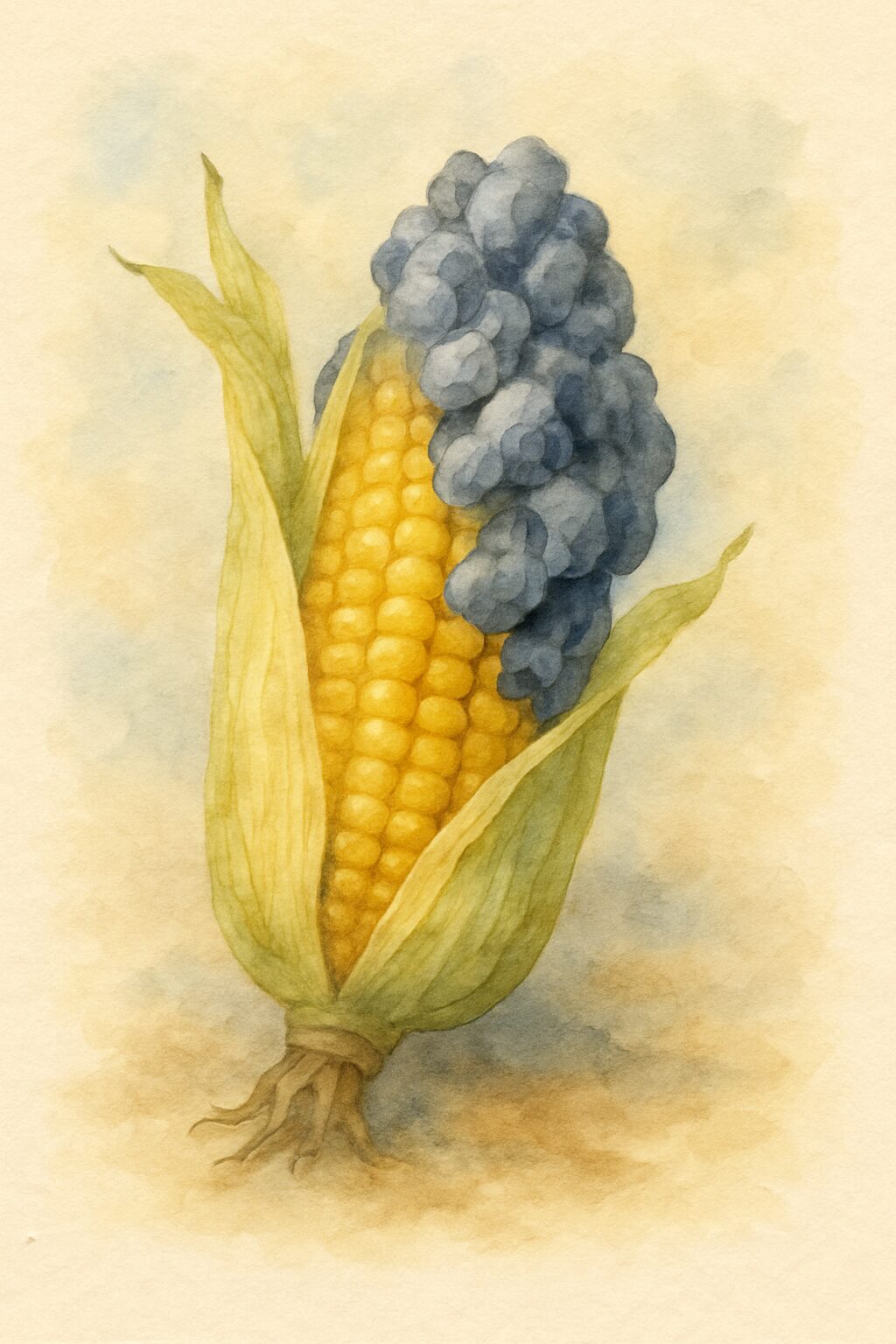
Common Name: Huitlacoche
There have been many theories about the meaning of the name, but the most common is “raven droppings.”
Alternative names are Corn Smut, Corn Truffle, Mexican Truffle, Cuitlacochi, & Maize Mushroom.
Scientific Name: Ustilago maydis
Editorial Note: This entry is part of The Culinary Compendium’s ongoing ingredient archive and will be expanded as new sources are examined.
History: Huitlacoche is a fungus that grows on ears of corn, transforming kernels into bulbous, silvery-grey galls. It has been harvested since pre-Colombian times. Rather than discarding infected corn, indigenous Americans instead saw the fungus as a gift from the gods and incorporated it into traditional dishes like tamales and stews.
Spanish chroniclers recorded its consumption as early as the 16th century; however, they quickly dismissed it as a crop disease.
In modern Mexico, huitlacoche is a seasonal treat as it appears naturally during the rainy season. It began appearing in fine dining establishments and was later introduced into American fusion cuisine in the 19s0s. Nearly ten years later, in 1989, the U.S. Department of Agriculture (USDA) approved the intentional cultivation of corn smut as a gourmet mushroom.
Interesting Facts: The fungus usually only grows on certain corn varieties, specifically heirloom and native maize, as they are more susceptible to infection than the heavily-bred industrial hybrids.
Uses: The ripe galls can be used in many of the same applications as common mushrooms. The most common dishes to include it are tacos, tamales, quesadillas, and omelets.
Selection & Storage: Huitlacoche is harvested when the fungal galls are fully developed, but still tender, usually around 16-18 days after infection. If they are left too long on the cob, they dry out and lose their flavor and texture. Ripe galls should feel firm, but not hard, and release a mild earthy aroma.
Taste Rating: ☆☆☆☆☆
Huitlacoche is not yet rated.
The Culinary Compendium is a working archive. If you have encountered this ingredient in your own research, regional cooking, historical sources, or family tradition. I invite you to leave a note below. Each entry grows richer with time.
Leave a Reply
You must be logged in to post a comment.