
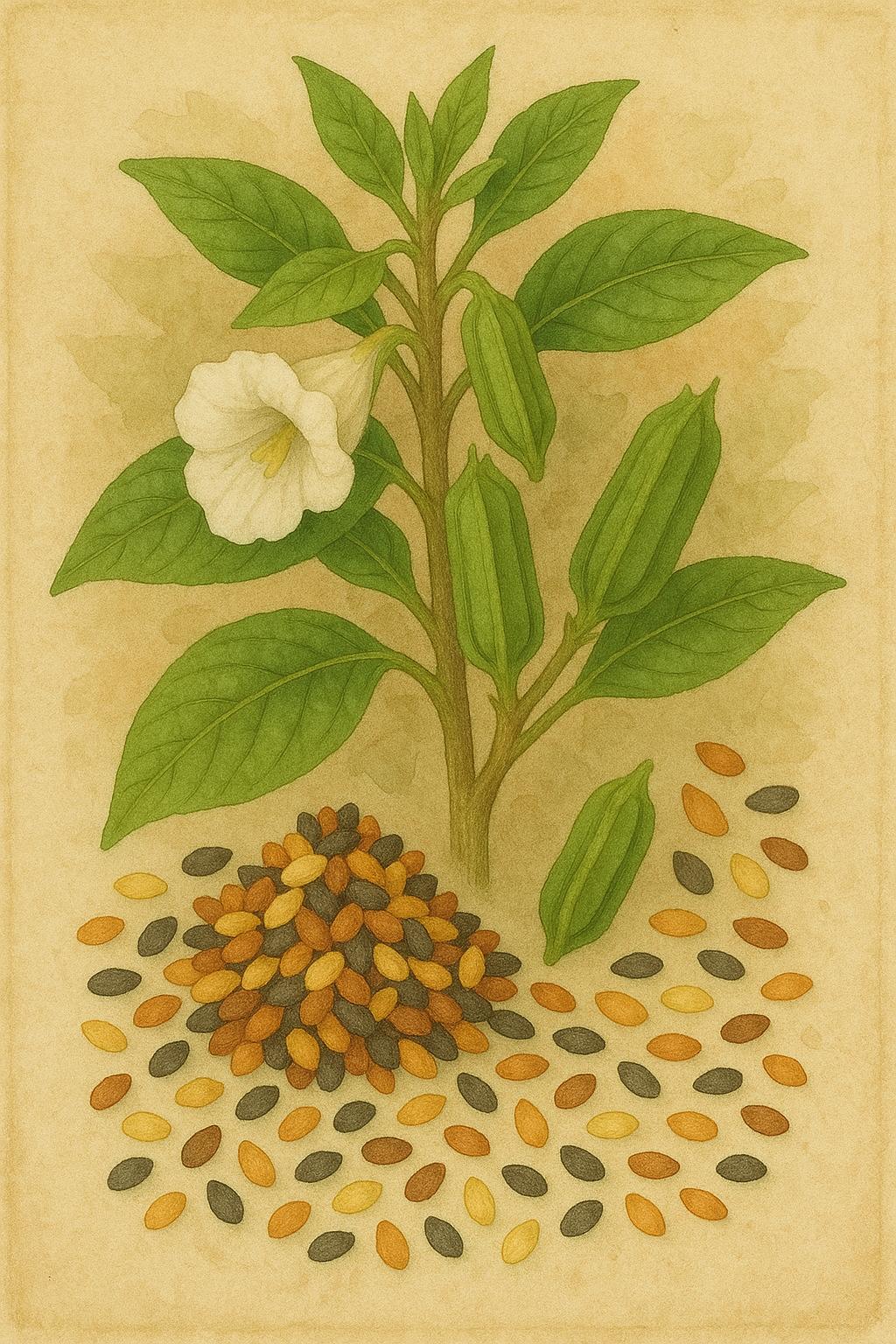
Common Name: Sesame
The name “sesame” is derived from two words in the ancient Akkadian language that meant “oil” and “plant.” This is possibly in reference to its earliest use as an oilseed.
Scientific Name: Sesamum indicum
Editorial Note: This entry is part of The Culinary Compendium’s ongoing ingredient archive and will be expanded as new sources are examined.
History: Sesame is an upright flowering plant that produces pods filled with small, flat seeds, which can vary in color from white to brown, red, or black.
One of the oldest cultivated crops, it was domesticated over 3,000 years ago in central Africa. The seeds are about 50% oil by weight and were one of the earliest oilseeds pressed for culinary use. Due to its drought resistance, sesame quickly became a staple crop. It appears in both Babylonian and Assyrian records.
Sesame made its way to Asia, where its first known Chinese documentation dates back to the Han Dynasty (202 BC-AD 220).
Sesame was introduced to America via the transatlantic slave trade.
Interesting Facts: In the One Thousand & One Nights (Arabian Nights) story “Ali Baba & the Forty Thieves”, the phrase “Open sesame” allows Ali Baba to open the cave of treasure. This is possibly a reference to sesame pods, which burst open when ripe, linking them to abundance, mystery, and unlocked secrets.
Uses: Sesame is an essential ingredient in the Middle Eastern spice blend za’atar and the Japanese seasoning furikake.
Selection & Storage: Fresh sesame seeds have a nutty aroma and crisp texture. Once rancid, the seeds will begin to smell stale or have an oily odor.
Taste Rating: ★★☆☆☆
Sesame has a mild and nutty taste when raw, which becomes toasty and rich when toasted.
The Culinary Compendium is a working archive. If you have encountered this ingredient in your own research, regional cooking, historical sources, or family tradition. I invite you to leave a note below. Each entry grows richer with time.
Leave a Reply
You must be logged in to post a comment.