
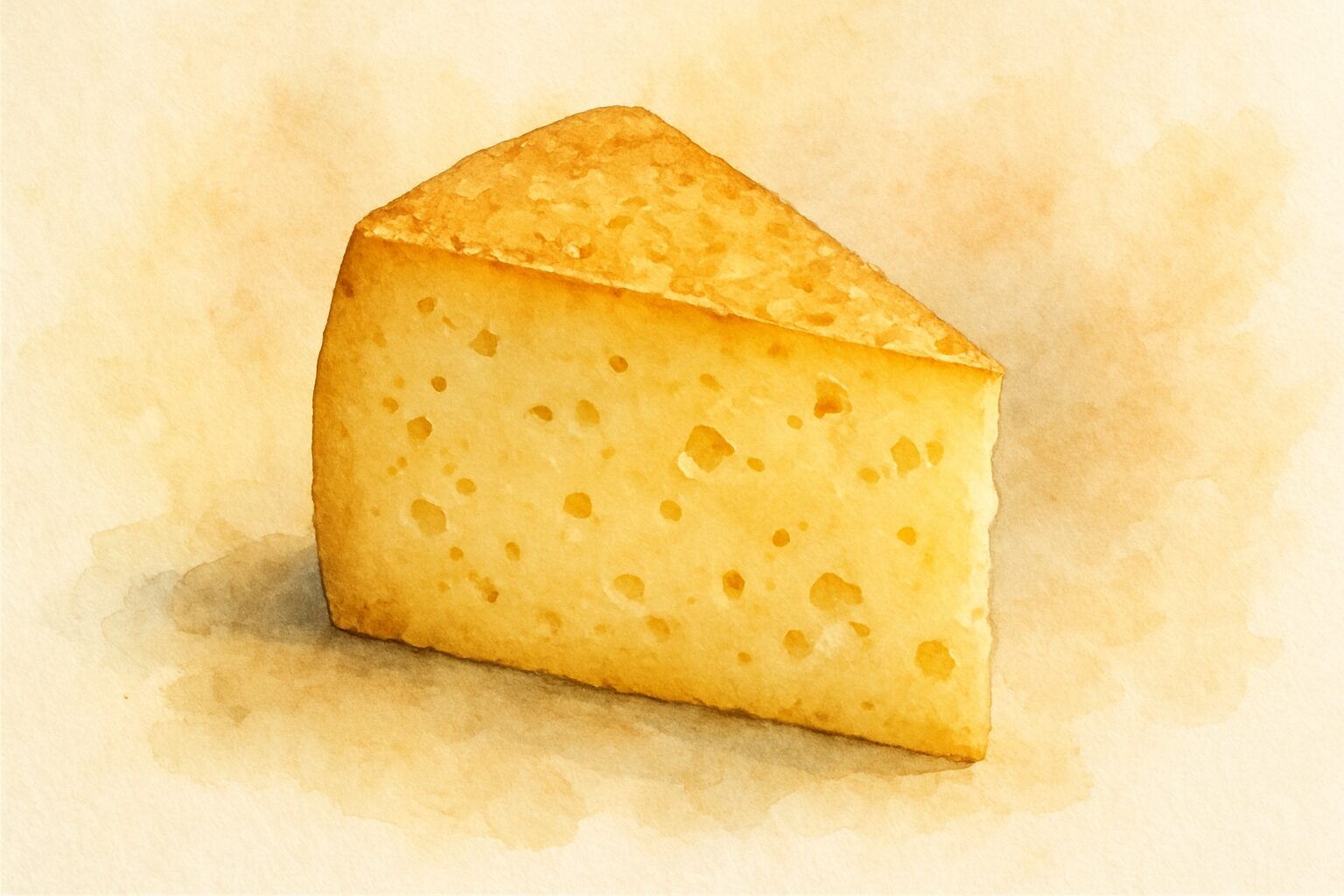
Common Name: Asiago
It is named after the small Italian town of Asiago, located at the foot of the Alps.
Editorial Note: This entry is part of The Culinary Compendium’s ongoing ingredient archive and will be expanded as new sources are examined.
History: Asiago cheese comes from the Asiago Plateau in the Veneto and Trentino-Alto regions of northern Italy. Its roots trace back thousands of years, when local shepherds began making cheese from sheep’s milk to preserve nutrition during the long winter. Over time, cows replaced the sheep, and by the 16th century, Asiago was produced almost exclusively from cows’ milk.
The cheese became a staple in the diets of mountain communities. Farmers relied on it for both food and trade. The aging process helped it last longer, making it valuable at local markets.
During the 19th and 20th centuries, improvements in dairy practices and the growth of Italy’s cheese industry spread Asiago’s reputation. Italian immigrants carried knowledge of the cheese abroad, where it continued to gain popularity.
Interesting Facts:
Uses: Asiago d’Allevo (aged) pairs well with figs and cured meats, making it a wonderful addition to cheeseboards.
Selection & Storage: Authentic Asiago should have the Protected Designation of Origin (PDO) mark. Avoid cheese with cracks, excessive dryness, or mold growth.
Wrap Asiago in wax paper before covering loosely in plastic and storing it in the cheese drawer. Asiago Pressato (fresh) can last 1 to 2 weeks once opened, while Asiago d’Allevo (aged) can last up to 6 weeks if stored properly.
Taste Rating: ☆☆☆☆☆
Asiago is not yet rated.
Let me know how you rate asiago in the comment section below!
Leave a Reply
You must be logged in to post a comment.