
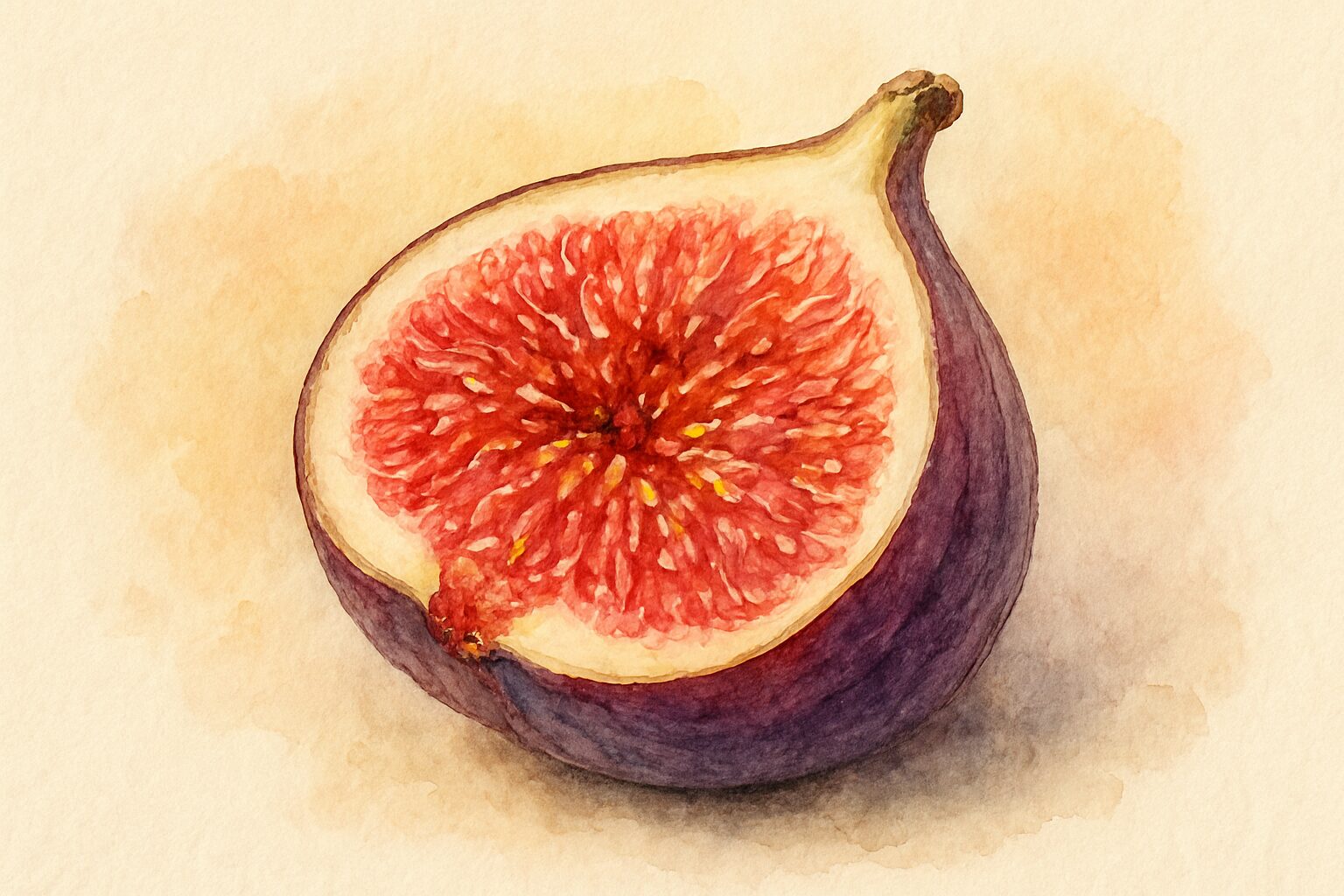
Common Name: Fig
Scientific Name: Ficus carica
Editorial Note: This entry is part of The Culinary Compendium’s ongoing ingredient archive and will be expanded as new sources are examined.
History: The fig was domesticated over 11,000 years in the Jordan Valley. Archaeologists have found carbonized figs that suggest their value was recognized long before formal agriculture developed.
In the ancient Near East, figs were a dietary staple. They grew easily in hot, dry climates, required little care, and produced abundant fruit. In Egypt, they were a symbol of prosperity. They were often buried with their deceased as nourishment in the afterlife.
In Greece, figs were sacred to Dionysus, the god of wine and merrymaking, and associated with fertility and abundance. The Romans cultivated multiple varieties of fig and ate them fresh, dried, and fermented.
Figs began to spread east to Persia and India via trade routes and west into Spain and Portugal under Roman and later Arab influence.
When Spanish missionaries traveled to the Americas in the 16th century, they brought figs with them. The “Mission Fig” still grows in California and traces its lineage to those first plants.
Interesting Facts: Legend holds that the she-wolf who nursed Romulus and Remus did so beneath a fig tree, the Ficus Ruminalis, playing a significant role in Rome’s origin story.
Many wild fig species rely on a specialized symbiotic relationship with fig wasps, which enter the fig to pollinate its hidden flowers. However, common edible figs (Ficus carica) are usually parthenocarpic, meaning they develop without pollination.
Uses: Figs enjoyed raw or dried, baked into pastries, simmered into jams, or paired with savory foods like cheese and cured meats, and fermented into fig wine or brandy.
Selection & Storage: Fresh figs should be plump, tender, and soft to the touch without being mushy. The skin should be smooth and intact, although Minor cracks near the stem are natural. Look for a rich color, which can be green, purple, brown, or black, depending on the variety.
Fresh figs are highly perishable and should be eaten within 1-2 days of purchase. Store unwashed figs in a single layer in the refrigerator, loosely covered, to prevent bruising.
Taste Rating: ★★★☆☆
The Culinary Compendium is a working archive. If you have encountered this ingredient in your own research, regional cooking, historical sources, or family tradition. I invite you to leave a note below. Each entry grows richer with time.
Leave a Reply
You must be logged in to post a comment.