
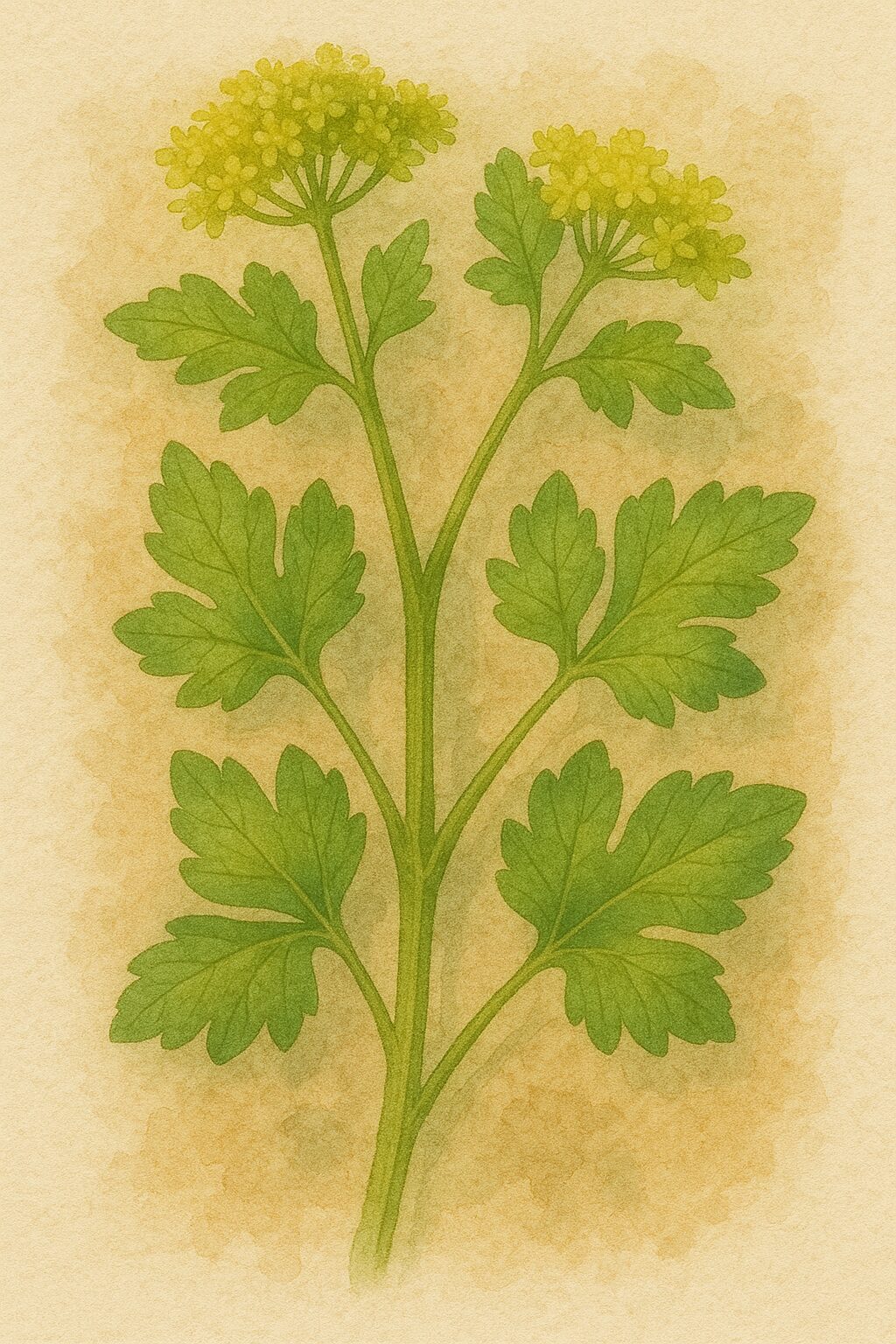
Common Name: Alexander
Alternate names include Black Lovage, Horse Parsley, Potherb, Smyrnium, and Wild Celery
Scientific Name: Smyrnium olusatrum
Alexander’s scientific name may derive from the Latin “olus atrum”, meaning dark herb, possibly in reference to its leaves, which can be dark green in color.
Editorial Note: This entry is part of The Culinary Compendium’s ongoing ingredient archive and will be expanded as new sources are examined.
History: Alexander is native to the Mediterranean basin, where it thrives in the salty, coastal soil. It was widely cultivated across the Roman Empire, where it was used as both food and medicine.
The Romans introduced it to Britain, where it became a popular herb during the Middle Ages. Alexander was so common in Medieval Europe that it was referred to simply as “pot herb”.
Despite Alexander’s popularity, it was largely replaced by celery during the 18th century. Now it is mostly used by foragers and culinary historians.
Interesting Facts: It is said to be named after Alexander the Great, but this theory has been debated.
Uses: Alexander was a favorite herb for Medieval herbalists and monks. Alexander can still be found in some monastic gardens and near abbey ruins.
It is most often used in salads, but it also goes well in stews and broths. The flower buds can be pickled like capers.
Selection & Storage: The leaves and stems are best harvested during early spring.
Taste Rating: ☆☆☆☆☆
Alexander is not yet rated.
The Culinary Compendium is a working archive. If you have encountered this ingredient in your own research, regional cooking, historical sources, or family tradition. I invite you to leave a note below. Each entry grows richer with time.
Leave a Reply
You must be logged in to post a comment.