
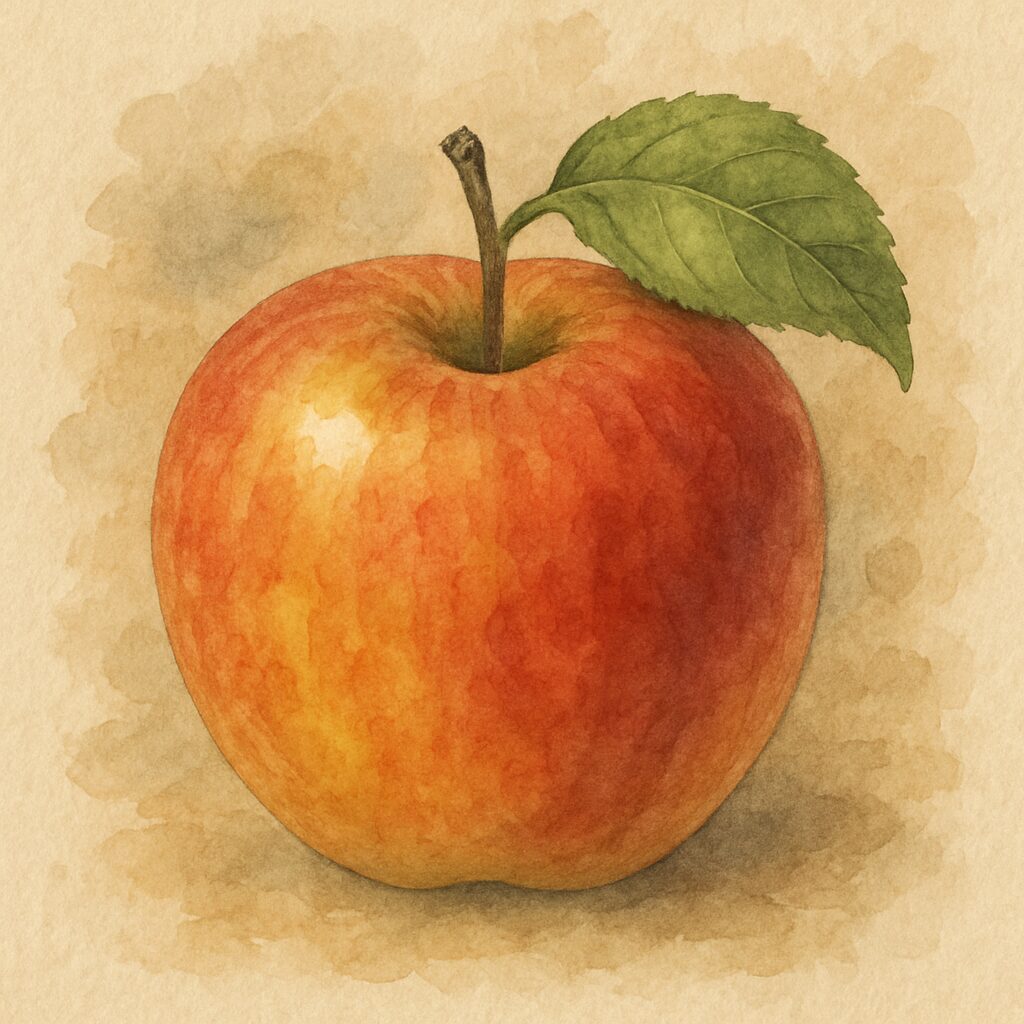
Common Name: Apple
Scientific Name: Malus domestica
Editorial Note: This entry is part of The Culinary Compendium’s ongoing ingredient archive and will be expanded as new sources are examined.
History: Apples are members of the rose family and are among the oldest domesticated fruits. They likely originated in the mountains of Central Asia, particularly Southern Kazakhstan, at least 50 million years ago.
From there, they traveled west on trade routes like the Silk Road, eventually making their way to Europe, where the Romans introduced grafting around AD 50, which led to more consistent varieties. Up until that point, apple trees were grown entirely from seed, and their “extreme heterozygosity” made it impossible to tell whether an apple would be tannic or sweet. Grafting allowed farmers to essentially clone their favorite apple varieties, which over time picked up names. By 1500, there were at least 65 named apple varieties in Normandy, France alone.
After the discovery of the Americas, colonists carried their beloved apple varieties with them to their new home. John Chapman, aka Johnny Appleseed, established apple nurseries across America during the early 19th century. As a result, there were thousands of named apple varieties across North America. Sadly, that number has significantly decreased since the rise of commercialism and consumer demand for more consistent and marketable varieties.
In 2013, former FBI agent David Benscoter founded the Lost Apple Project, which is dedicated to finding and preserving lost or rare heritage apple varieties.
Interesting Facts: Apples have over 57,000 genes, which is more than twice the number of a human, who has about 20,000-25,000. As a result, each new tree (grown from seed, not grafted) is unique, with fruit that is different from any other apple ever grown or ever will be. This wide genetic variation is called “extreme heterozygosity.”
Apples have been the topic of many myths around the world. Although never explicitly mentioned, apples are often associated with the “Forbidden Fruit” in Genesis. The golden apple of discord sparked a dispute among the gods, which eventually led to the Trojan War. In Norse mythology, Iðunn, the goddess of spring, carried magic apples that granted immortality.
The saying “An apple a day keeps the doctor away” stems from 19th-century Welsh proverbs.
Uses: Apples can be eaten raw as a snack or incorporated into both sweet and savory recipes. Apples can also be juiced or fermented into cider.
Selection & Storage: A ripe apple yields slightly to light pressure and should have a pleasant apple scent.
Apple flavors vary by variety. Granny Smith apples are tart and good for baking. Sweet varieties like Fuji and Honeycrisp have a more balanced flavor and are good for eating raw. Local Farmers’ Markets are a good place to find new and interesting varieties and flavors to add to recipes or just to try.
Taste Rating: ★★★☆☆
The Culinary Compendium is a working archive. If you have encountered this ingredient in your own research, regional cooking, historical sources, or family tradition. I invite you to leave a note below. Each entry grows richer with time.
Leave a Reply
You must be logged in to post a comment.