
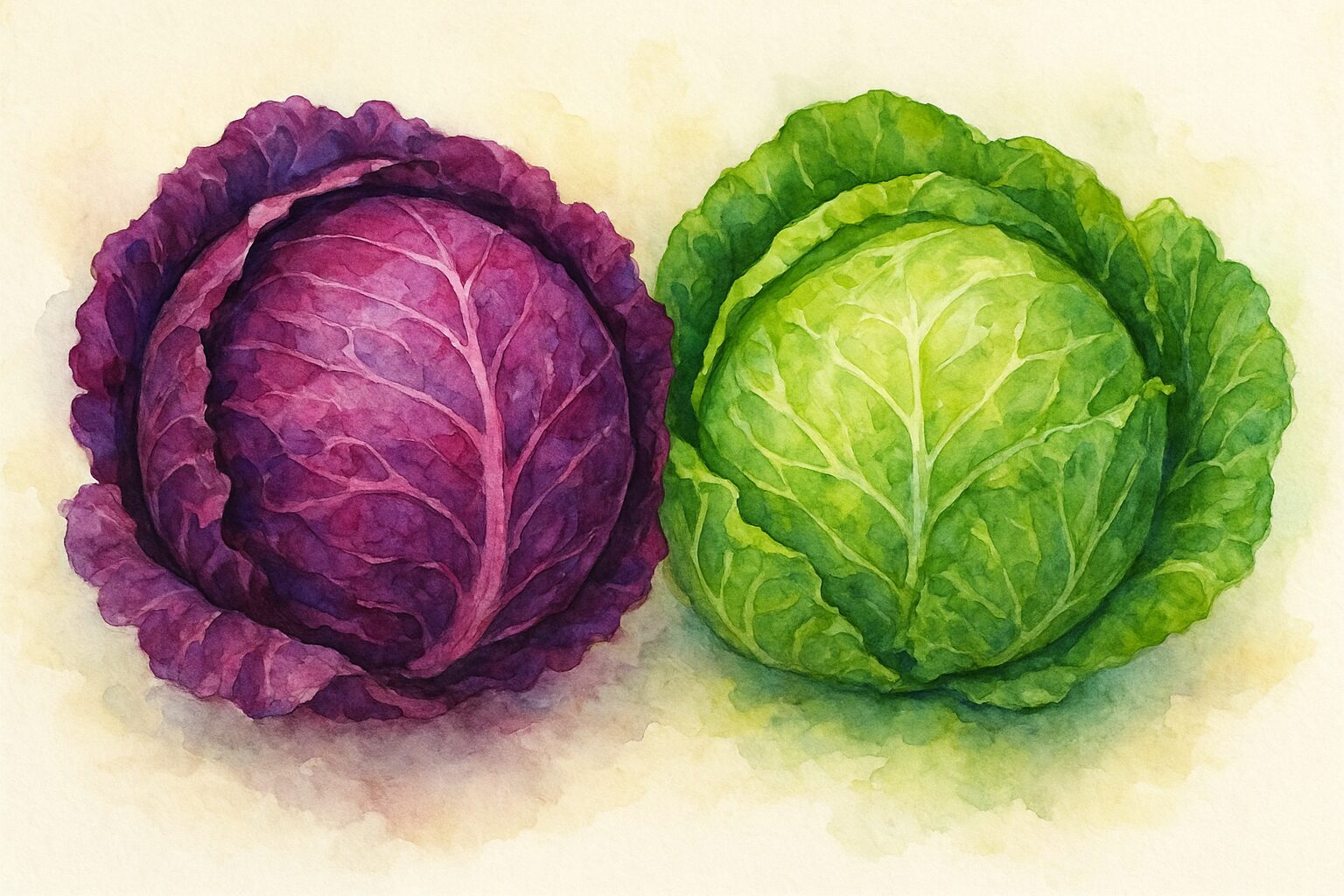
Common Name: Cabbage
The name “cabbage” comes from the Latin “caput”, meaning “head”.
Scientific Name: Brassica oleracea var. capitata
Editorial Note: This entry is part of The Culinary Compendium’s ongoing ingredient archive and will be expanded as new sources are examined.
History: Cabbage traces back to wild Brassica plants that grew along the coast of Europe and the Meditarranean. Hardy and salt-tolerant, it was especially adapted to the rocky shorelines of the Mediterranean where it was domesticated 2,500 years ago.
The ancient Greeks and Romans valued cabbage as both food and medicine. Writings by Hippocrates and Pliny the Elder mention cabbage as a digestive aid, hangover cure, and a staple vegetable.
By the Middle Ages, cabbage had become one of Europe’s most important vegetables. It thrived in cooler climates, provided reliable nutrition, and could be stored for long periods, especially when pickled or fermented.
Unlike today’s compact heads, the earliest cabbages were loose-leaf and more closely resembled kale. The tight, round “heading” recognized today likely developed in Northern Europe around the 12th–14th centuries through careful selection. This improvement made cabbage even more valuable because compact heads stored and transported better than the original loose leaves.
By the 18th and 19th centuries, cabbage was firmly established worldwide as a staple crop. Different regions developed unique culinary uses, from German sauerkraut to Korean kimchi and American coleslaw. Its reputation as a hardy, nutritious, and versatile vegetable has carried into the present day.
Interesting Facts: Cabbage shares its species with broccoli, kale, cauliflower, Brussels sprouts, and kohlrabi, all of which are different cultivars of the same plant: Brassica oleracea.
Red cabbage contains anthocyanins, the same antioxidants found in blueberries, which give it its vibrant purple color and extra health benefits.
Uses: Cabbage can be used raw in salads and coleslaw, cooked in stews and cabbage rolls, or fermented into sauerkraut or kimchi.
Selection & Storage: Choose heads that feel heavy and dense for their size, indicating tightly packed leaves. The leaves should be crisp and vibrant without any yellowing or wilting. The base should be clean and not overly dry or cracked.
Store whole, unwashed cabbage in the crisper, ideally wrapped in a perforated plastic bag to maintain humidity, where it can last up to 2 weeks. Once cut, place in an airtight container and use within 2–3 days, as it loses freshness quickly.
Taste Rating: ★★☆☆☆
The Culinary Compendium is a working archive. If you have encountered this ingredient in your own research, regional cooking, historical sources, or family tradition. I invite you to leave a note below. Each entry grows richer with time.
Leave a Reply
You must be logged in to post a comment.