
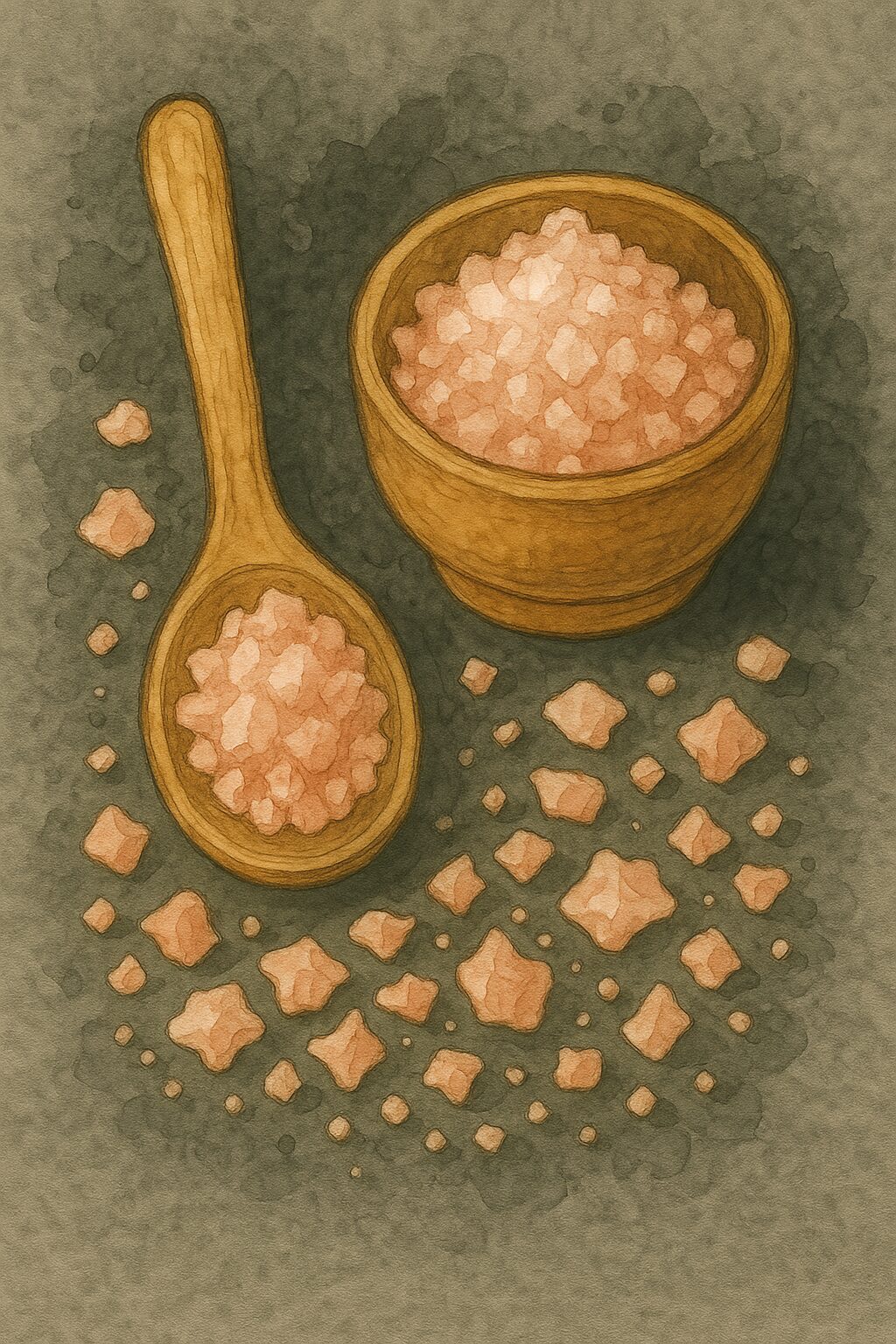
Common Name: Himalayan Salt
Scientific Name: Sodium Chloride (NaCl) and trace amounts of iron oxide (Fe2O3)
Editorial Note: This entry is part of The Culinary Compendium’s ongoing ingredient archive and will be expanded as new sources are examined.
History: Himalayan salt is estimated to have been formed over 600 million years ago and likely originated from the evaporation of ancient seas. Over millions of years, tectonic plates shifted and sealed the salt deposits under the Himalayan mountain range, protecting them from modern pollution. The Khewra Salt Mine is one of the oldest and largest salt mines in the Himalayas.
The Khewra mine is located in the foothills of the Salt Range in Punjab, Pakistan, and has been actively mined for over 2,000 years. It is a vital part of South Asian trade and economy.
Interesting Facts: According to legend, Alexander the Great’s army discovered the mine when their horses began to lick the exposed salt rocks, revealing the hidden deposits.
Himalayan salt has over 80 different trace minerals and the color ranges from translucent white to a deep rosy pink, depending on the amount of minerals present.
Uses: Salt heightens sweetness, balances bitterness, enhances umami, and complements almost any food. Himalayan salt is best in raw or finishing applications to highlight its complexity.
Selection & Storage: Himalayan salt has a lovely color ranging from translucent white to a deep rosy pink, depending on the amount of trace minerals present. Look for dry crystals with uniform color. True Himalayan salt is mined by hand and undergoes minimal processing.
Taste Rating: ☆☆☆☆☆
Himalayan salt is not yet rated.
The Culinary Compendium is a working archive. If you have encountered this ingredient in your own research, regional cooking, historical sources, or family tradition. I invite you to leave a note below. Each entry grows richer with time.
Leave a Reply
You must be logged in to post a comment.