
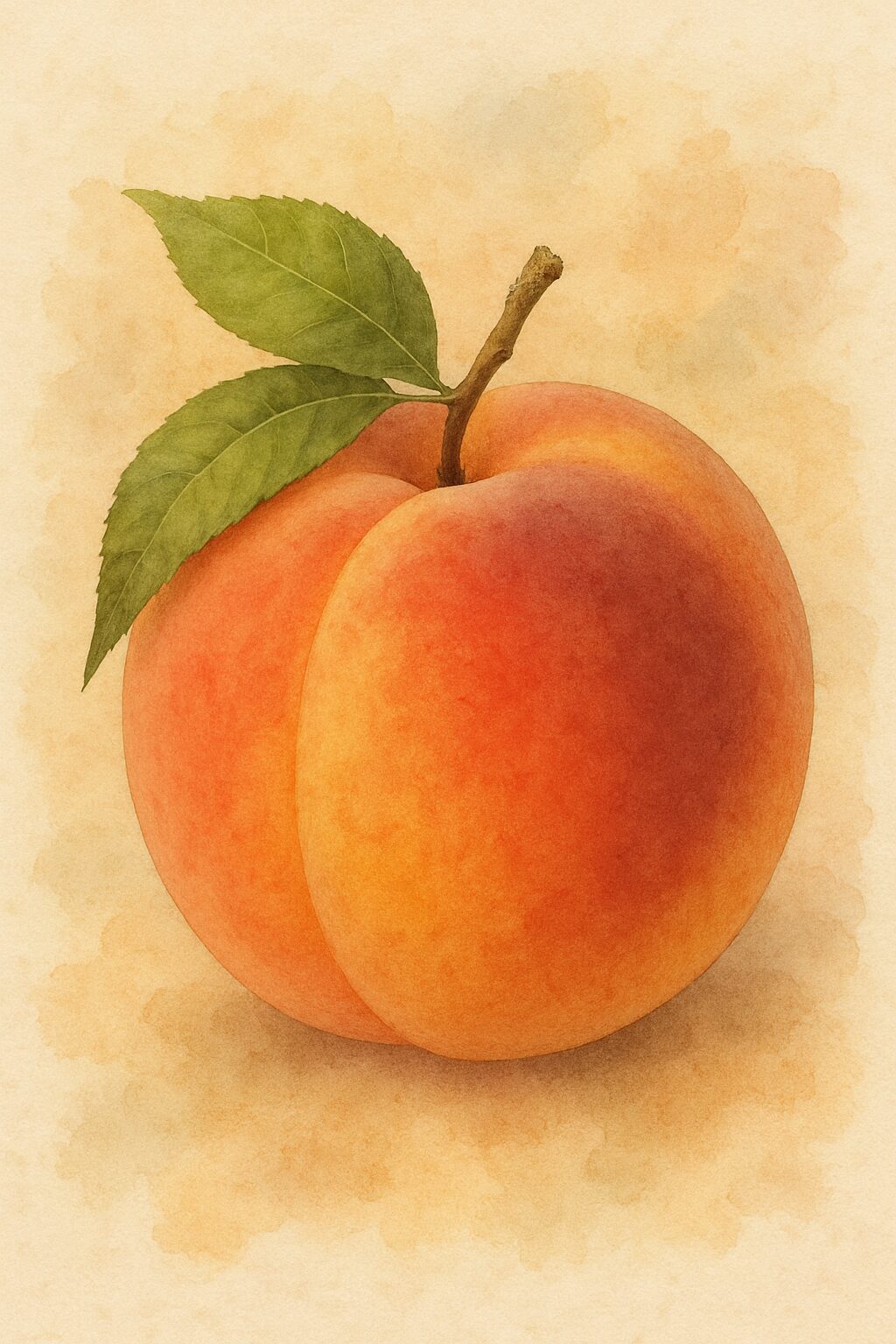
Common Name: Peach
Scientific Name: Prunus persica
Despite the Latin name “persica”, peaches are not Persian, but Chinese.
Editorial Note: This entry is part of The Culinary Compendium’s ongoing ingredient archive and will be expanded as new sources are examined.
History: Archaeological evidence suggests that peaches were first cultivated in the Yangtze River Valley.
Peaches are mentioned in the Classic of Poetry (Shijing), one of China’s oldest literary works. The fruit also plays a role in Taoist beliefs, where mythical Peaches of Immortality grant eternal life to the gods and worthy humans. Imperial gardens often cultivated special peaches that were offered to the emperor and nobles.
From China, the peach traveled west on the Silk Road, eventually making its way to Persia (modern-day Iran), which cultivated it extensively. Greek and Roman encounters with the peach likely came from there, leading them to mistake its place of origin, as seen in the Latin name, Prunus persica.
By the Renaissance, peaches had spread throughout Europe and began to appear in literature and art. The fruit also became associated with love and sensuality, a motif that prevails today.
In the 16th century, Spanish and Portuguese explorers introduced the peach to the Americas, where it thrived in the southern regions of the United States. In 1995, Georgia, USA, adopted the peach as its official state fruit.
Interesting Facts: In Taoist mythology, Queen Mother of the West (Xiwangmu) tended the Peaches of Immortality, which granted eternal life to the gods.
In Japanese manga and folklore, the hero Momotaro (Peach Boy) is born from a giant peach.
Peaches and nectarines are the same species; a single gene determines fuzziness.
China produces 60% of the world’s peaches.
Uses:
Selection & Storage: Ripe peaches should smell floral, yield slightly to gentle pressure, and show vibrant coloration with no green at the stem. They should feel heavy for their size, indicating juice content.
Taste Rating: ★★★★☆
Peaches are sweet and slightly tangy. White varieties tend to be mild and floral, while yellow varieties tend to be brighter and more acidic.
The Culinary Compendium is a working archive. If you have encountered this ingredient in your own research, regional cooking, historical sources, or family tradition. I invite you to leave a note below. Each entry grows richer with time.
Leave a Reply
You must be logged in to post a comment.