
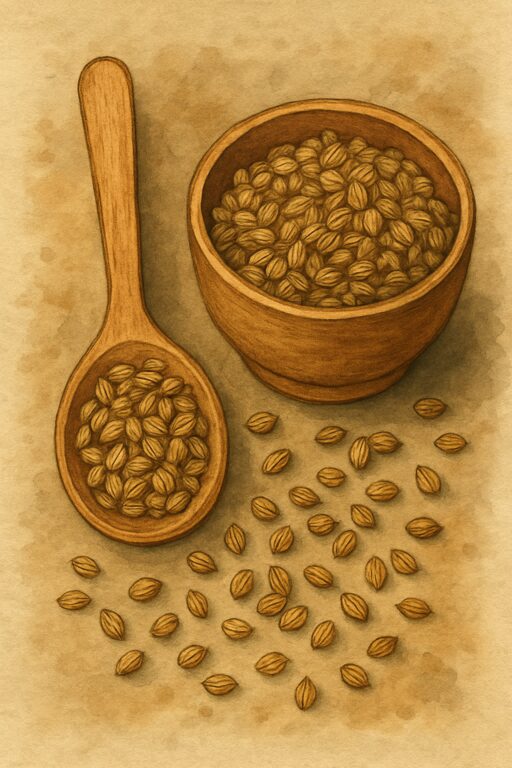
Common Name: Ajwain
The name ajwain likely comes from the Sanskrit “yavani,” meaning “of the gods”.
Alternate names include Ajowan, Bishop’s Weed, Carom, Carum, and Thymol Seed.
Scientific Name: Trachyspermum ammi
Editorial Note: This entry is part of The Culinary Compendium’s ongoing ingredient archive and will be expanded as new sources are examined.
History: Ajwain is thought to have originated in the Indian subcontinent and was documented in ancient Sanskrit texts for its medicinal use. The classical Greeks and Romans also took an interest in its medicinal qualities as a digestive.
Until the early 20th century, ajwain was the world’s largest source of thymol, which is used to manufacture toothpaste, mouthwash, and throat lozenges.
Interesting Facts: The “seeds” are actually small fruit.
Uses: Ajwain has been used in Ayurvedic practices for over 2,000 years to aid digestion, reduce bloating, and treat respiratory ailments. It is added to breads, legumes, and fried food to increase digestibility. Ajwain water is a common household remedy for indigestion and colic.
Ajwain is traditionally toasted or fried in ghee (clarified butter) to awaken its flavor and aroma before use in culinary applications.
Selection & Storage: Look for ajwain that is uniform in color and free of debris. To tell if ajwain is still potent, crush a seed between your fingers; it should emit a strong thyme-like scent. Old ajwain will have a weak scent and a bitter taste. Ajwain can be ground into powder, but it is most often used whole.
Store in an airtight container away from excess heat, light, and humidity.
Warning: Pregnant women should avoid consuming ajwain due to potential adverse effects on fetal development. It is also discouraged when breastfeeding. Ajwain has anti-clotting effects and may react negatively with certain medications.
Taste Rating: ☆☆☆☆☆
Ajwain is not yet rated.
Ajwain tastes like thyme due to the same volatile oil, thymol. It is pungent with earthy and medicinal notes. However, it should be used in moderation as it can become overpowering.
The Culinary Compendium is a working archive. If you have encountered this ingredient in your own research, regional cooking, historical sources, or family tradition. I invite you to leave a note below. Each entry grows richer with time.
Leave a Reply
You must be logged in to post a comment.