
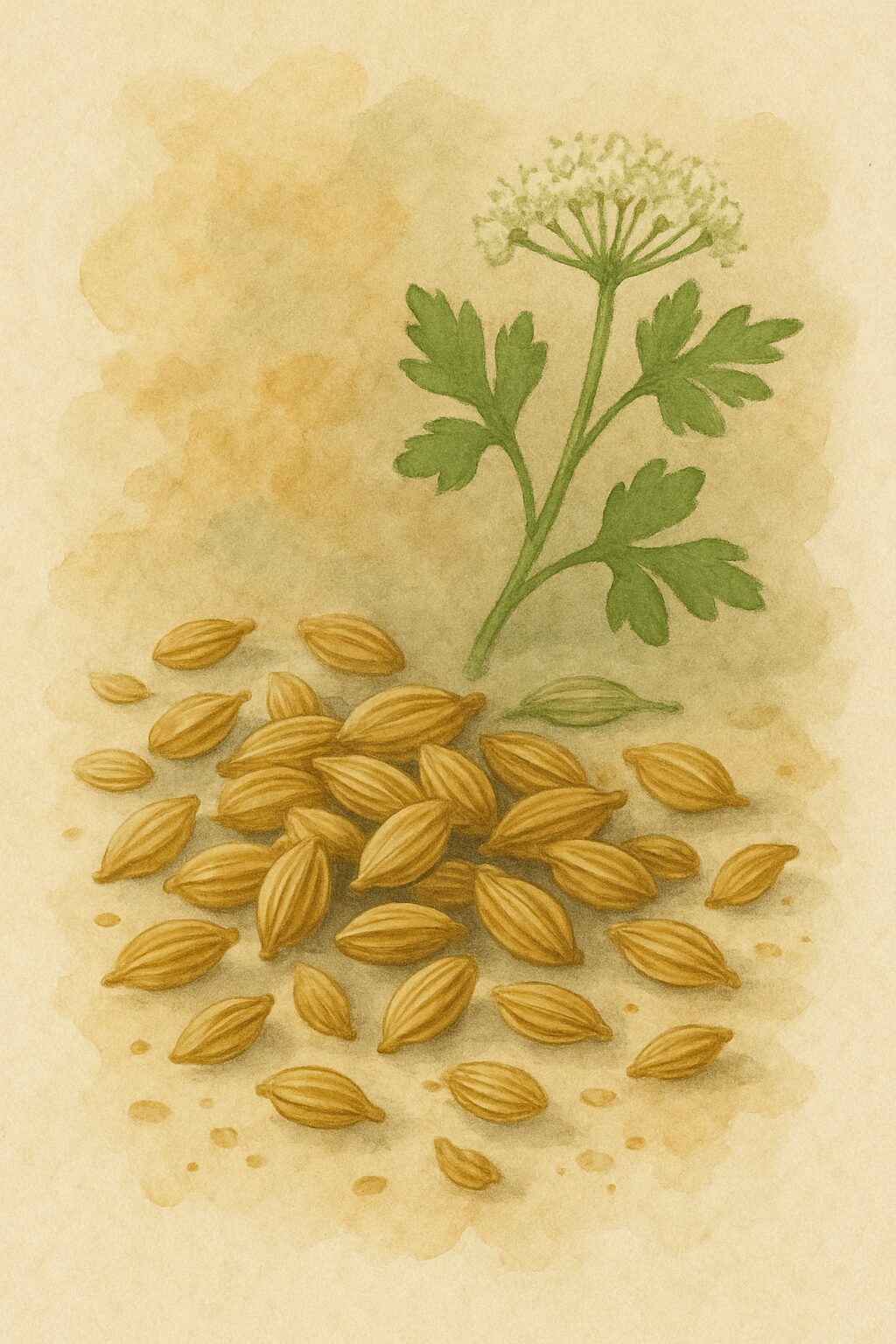
Common Name: Anise
An alternate name is aniseed.
Scientific Name: Pimpinella anisum
Editorial Note: This entry is part of The Culinary Compendium’s ongoing ingredient archive and will be expanded as new sources are examined.
History: Anise is native to the Eastern Mediterranean and West Asia and was cultivated in ancient Egypt as early as 1500 BC. It is listed in the Ebers Papyrus as a medicinal spice.
It was prized by the Greeks and Romans as a digestive and it was often served after a feast in the form of spiced cakes.
Interesting Facts: Its signature scent is due to the compound anethole, a powerful volatile oil.
Anise oil is used in fishing bait for its ability to attract fish and mask human scent.
Uses: In Europe it is incorporated into breads and holiday confections.
In India it is chewed after meals to freshen the breath and aid digestion.
Anise is the main flavor in a variety of spirits such as ouzo (Greece), raki (Turkey), pastis (France), absinthe (Switzerland), arak (Levant), and sambuca (Italy).
Pliny the Elder mentions anise in his encyclopedic work, Natural History. He states that it is beneficial for sleep as its sweet scent keeps nightmares away. However, he is known to embellish a bit.
Selection & Storage: High-quality anise is sweet-smelling and free of bitterness and must.
Anise should be stored in an airtight container away from excess heat, light, and humidity.
Taste Rating: ★☆☆☆☆
The flavor is strongly reminiscent of licorice, but it is milder than fennel or star anise (Illicium verum). Unfortunately, I find the taste of licorice horribly unpleasant and cloying.
The Culinary Compendium is a working archive. If you have encountered this ingredient in your own research, regional cooking, historical sources, or family tradition. I invite you to leave a note below. Each entry grows richer with time.
Leave a Reply
You must be logged in to post a comment.