
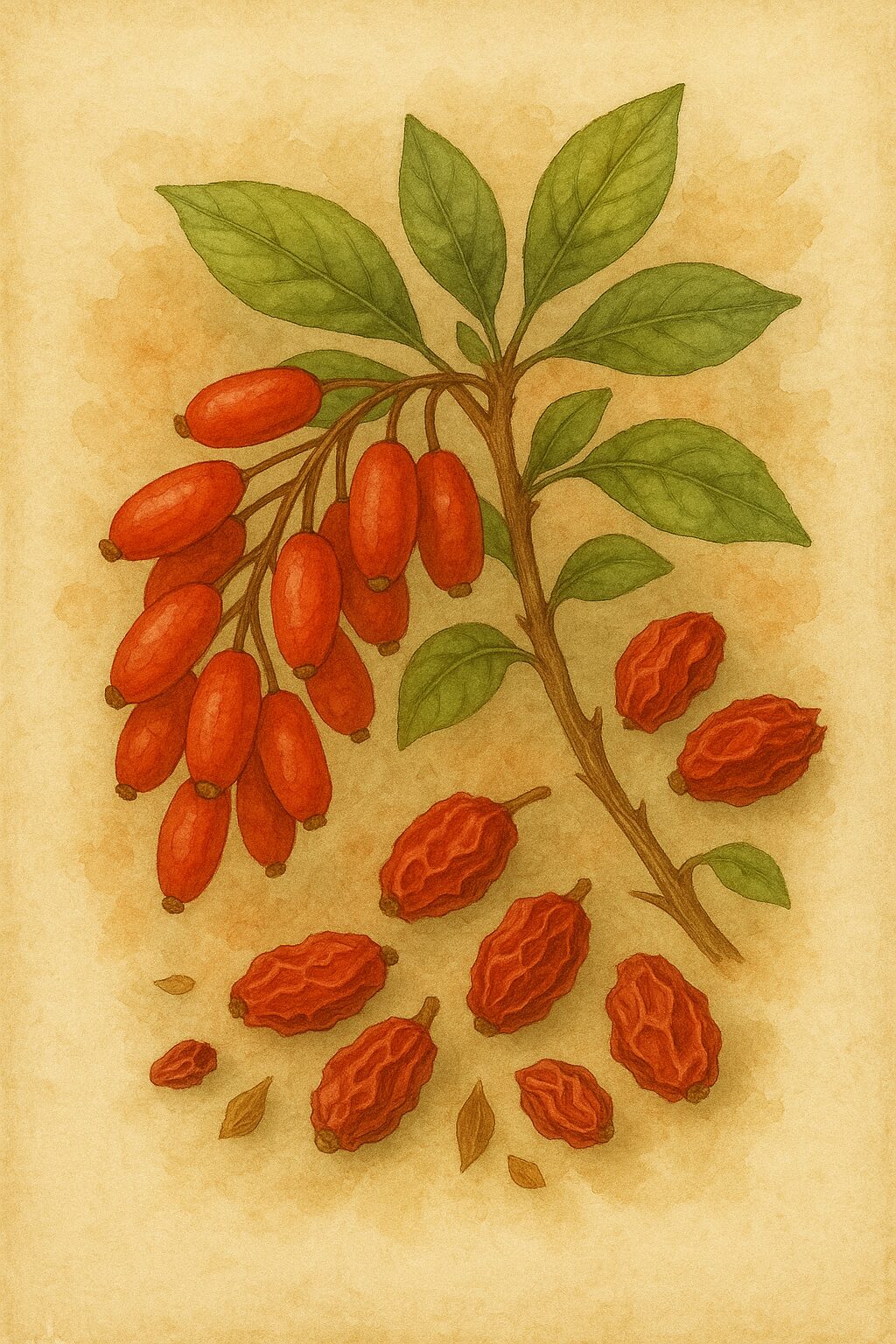
Common Name: Barberry
Alternate names are Berberry, European Barberry, Holy Thorn, Jaundice Berry, Pipperidge Bush, Sowberry, Zareshk
Scientific Name: Berberis vulgaris
The name Berberis is derived from the Arabic “berberys”, which has no direct English translation. However, it is speculated that it may be a reference to the plant’s shiny leaves.
Editorial Note: This entry is part of The Culinary Compendium’s ongoing ingredient archive and will be expanded as new sources are examined.
History: Barberries have been used since ancient times. The ancient Greek scholars Hippocrates, Pliny the Elder, and Dioscorides all wrote of barberry and its medicinal properties, especially for maladies pertaining to the liver.
During the Medieval Islamic Golden Age, barberries were well documented in medicine and were mentioned in works by Avicenna (Ibn Sina), a Persian physician and philosopher.
Interesting Facts: Iran is the world’s largest producer of culinary barberries.
In Christian herbal symbolism, thorned plants are often associated with Christ’s Passion, as in the Crown of Thorns, and were associated with penance and Divine protection, hence the epithet “holy”. Although hawthorn is the plant most often identified with this imagery, other thorny plants, like the barberry, have similar symbolic associations.
Uses: Barberries add tangy brightness to foods and are prized in Persian, Kurdish, and Central Asian cuisine, where it is incorporated into pilafs, stews, and sauces.
In European herbal medicine, the bark and root of the barberry shrub were used to treat jaundice, fevers, and infections. This is due to the high amounts of berberine, which has antimicrobial properties.
Selection & Storage: Quality dried barberries should be bright red, slightly sticky, and tart. They should have a cranberry-like scent and be free of any mustiness.
Taste Rating: ☆☆☆☆☆
Barberry is not yet rated.
The Culinary Compendium is a working archive. If you have encountered this ingredient in your own research, regional cooking, historical sources, or family tradition. I invite you to leave a note below. Each entry grows richer with time.
Leave a Reply
You must be logged in to post a comment.